Jay Mountain church
The Jay Mountain church is a small, old, abandoned wooden church on top of Jay Mountain near Windrixville, serving as the central physical setting for the middle section of the novel. It is the place where Ponyboy and Johnny hide after the murder of Bob Sheldon, and where a fire forces them to risk their lives to save a group of children, an act that changes the course of their story. The church is described as "real old and spooky and spiderwebby," with a stone floor and a back door that opens onto a steep drop offering a panoramic view of the valley below. It has a pump in back for water, but no electricity or modern amenities, and its isolation makes it an ideal but grim hideout for two boys on the run from the law.
Location and Description
The church is situated on Jay Mountain, a hill that Ponyboy and Johnny reach after a forty-five-minute climb up a steep road from the red dirt road below. The building is small and old, with a back window they use to enter. Inside, the floor is made of cold stone, and the space is dusty and filled with cobwebs. The back of the church faces east, so the boys cannot watch the sunset from there, but they sit on the back steps and look across the valley, observing the "ribbon of highway" and the "small dots that were houses and cars." The church is surrounded by dead leaves and trees, and the wind rushes through them, creating a constant, lonely sound. The nearest house is two miles away, and the only visitors are occasional farm kids riding horses by on their way to the store.
The Hideout and Daily Life
Dally Winston directs the boys to the church as a hideout, telling them to hop the three-fifteen freight to Windrixville and then find the "old abandoned church on top of Jay Mountain." He instructs them to buy a week's supply of food immediately and then not to stick their noses out the door. Ponyboy and Johnny spend five days in the church, living on baloney sandwiches, playing poker, and reading Gone with the Wind. They cut their hair and bleach Ponyboy's to disguise themselves, and they sleep huddled together on the cold stone floor for warmth, wrapped in Dally's jacket. The days are the longest they have ever spent, and Ponyboy becomes so tired of baloney that he nearly gets sick every time he looks at it. They are careful with their cigarettes, knowing that if the old church ever caught fire, there would be no stopping it.
The Fire and Rescue
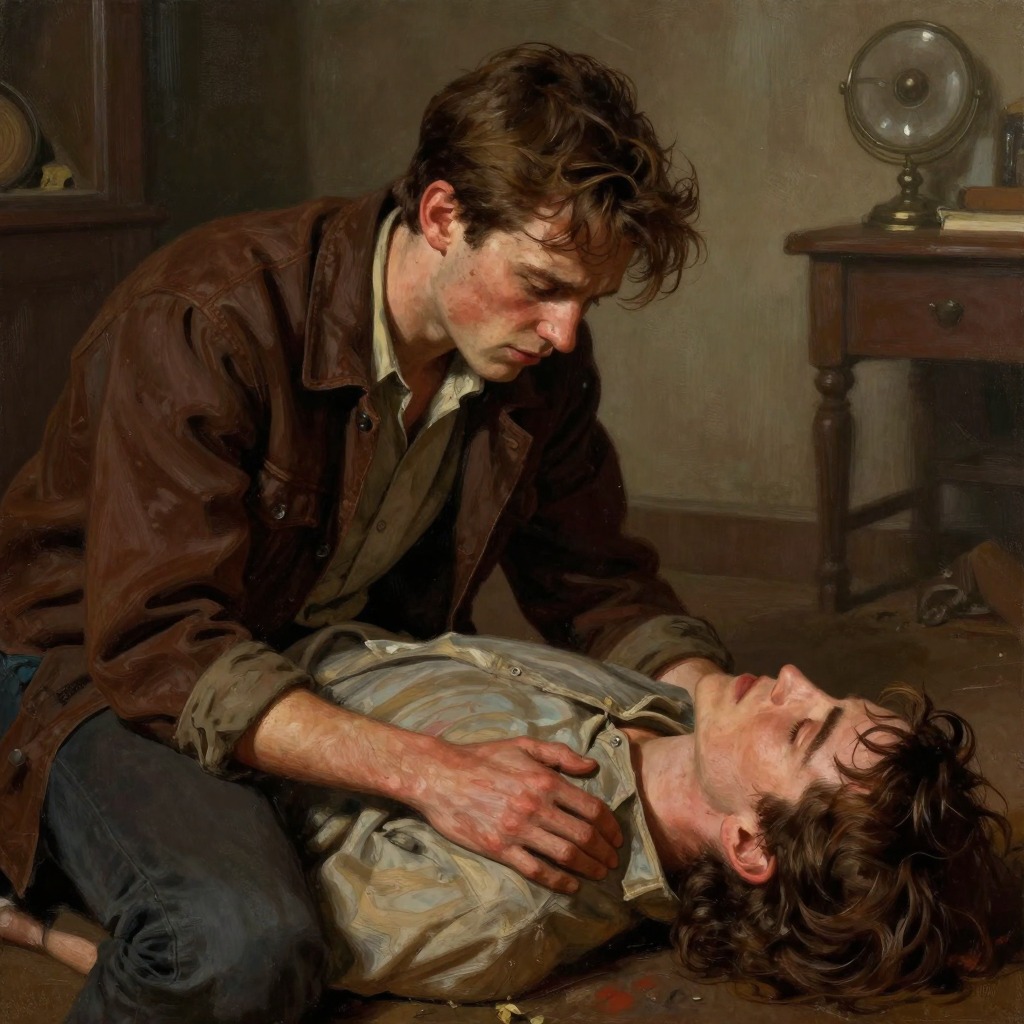
On the fifth day, Dally returns to the church with news from the outside world, but as they drive up the mountain, they see that the church is on fire. A school picnic is taking place nearby, and several children are missing inside the burning building. Ponyboy and Johnny, believing they started the fire with a dropped cigarette, run into the church through a window to rescue the children. The interior is filled with smoke and falling embers, and the roof is beginning to cave in. They find four or five young children huddled in a back room and toss them out the window to safety. Johnny pushes Ponyboy out the window just as the front of the church crumbles, and a piece of timber falls on Johnny's back, breaking it and causing severe burns. Dally, who had been shouting at them to get out, goes back in to drag Johnny out, burning his own arm badly in the process. The church is destroyed by the fire, and the three boys are taken to the hospital, where Johnny later dies from his injuries.
Narrative Significance
The Jay Mountain church functions as a crucible for the novel's central themes of identity, sacrifice, and redemption. It is the place where Ponyboy and Johnny, marked as juvenile delinquents and murderers, transform into heroes through a selfless act of courage. The church's isolation strips away the social labels of "greaser" and "Soc," leaving only the raw human choices of the boys inside. The fire and the rescue also serve as the catalyst for the public recognition of their heroism, which ultimately helps Ponyboy avoid being sent to a boys' home and allows Johnny to die with a sense of purpose, believing that saving the children was worth his life. The church, in its ruin, becomes a symbol of the possibility of change and the enduring value of human goodness in a world marked by violence and class conflict.